- New
Welcome you to Ayurmedplus store!

Welcome you to Ayurmedplus store!
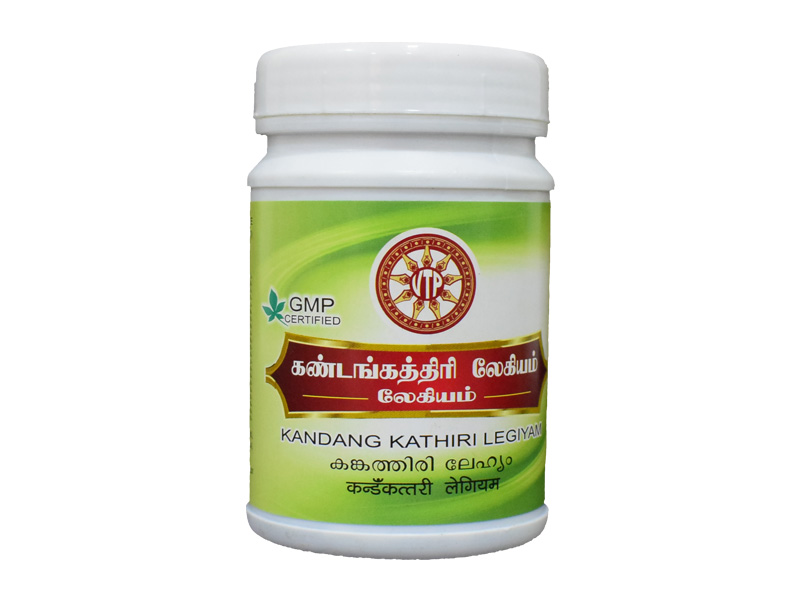
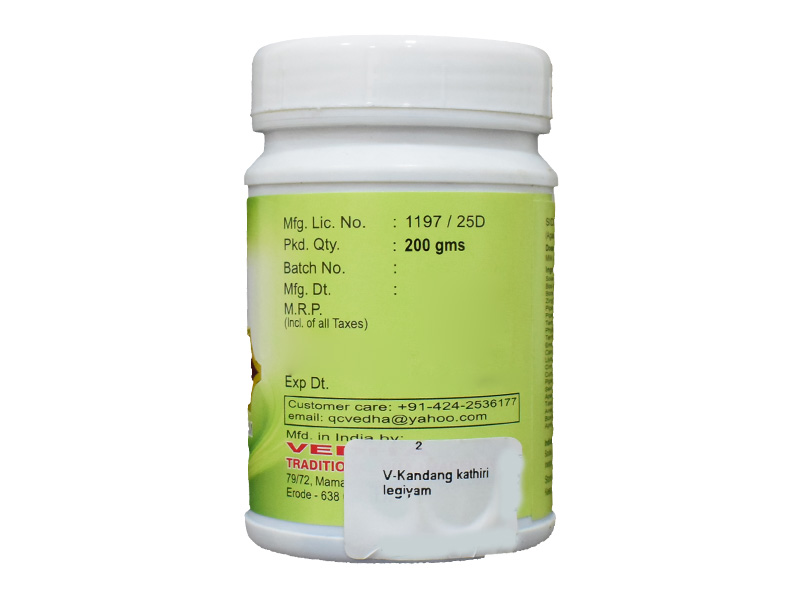
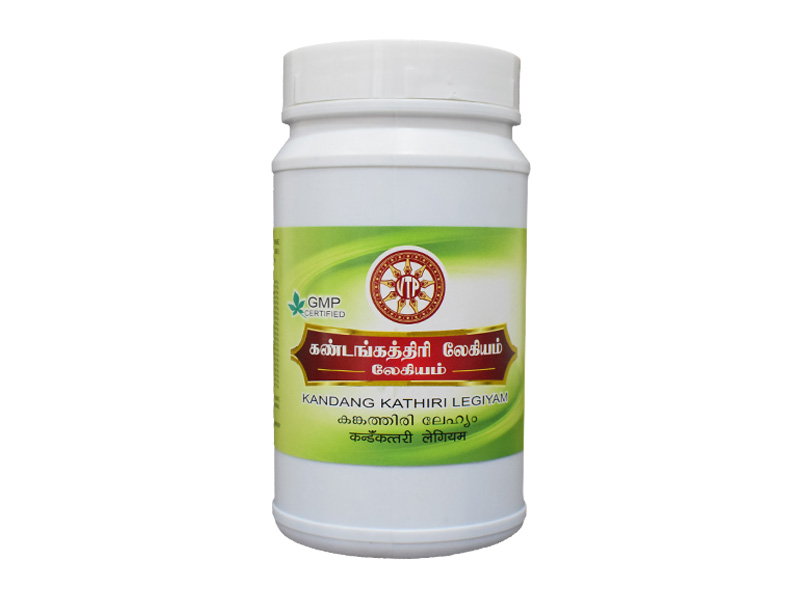
Unit : 200gm
BRAND : Vedha Traditional Pharma
Form Of Medicine : lehyam
Category : SASTHIRIYA MEDICINE
Product Indication :
| Indication | Cough Throat Infection Asthma Breathlessness Respiratory distress Dyspnoea |
|---|---|
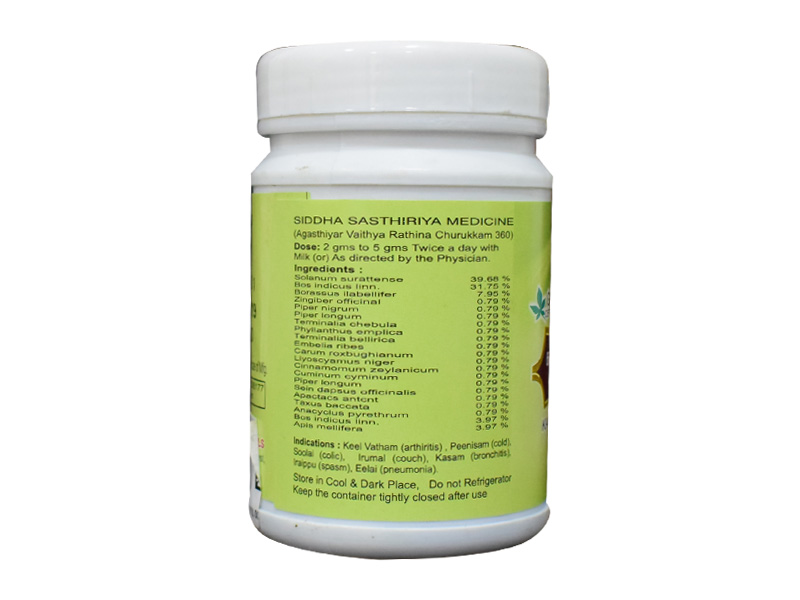
| Ingredients |
|
| Dosage | As directed by physician |
KANDANGKATHIRI LEGIYAM
Kandangkathiri Legiyam is a classical Siddha medicine it is used to treat bronchial asthma, chronic bronchitis, difficulty in breathing, and for all kinds of respiratory disorders, wheezing, chest congestion, cough & cold, accumulation of sputum.
ROLE OF INGREDIENTS;
Solanum xanthocarpum - is used traditionally for curing various ailments. Decoction of the plant is used in gonorrhea; paste of leaves is applied to relieve pains; seeds act as an expectorant in cough and asthma; roots are expectorant and diuretic, useful in the treatment of catarrhal fever, coughs, asthma, and chest pain
Solanam trilobatum - is a widely used plant in the Indian indigenous systems of medicine. It is mainly used in the treatment of respiratory diseases like bronchial asthma. In our present study, we report that the aqueous and alcoholic extracts of S. trilobatum exhibited inhibition of mast cell degranulation.
Adathoda vasica - use of Adhatoda Vasica is as an expectorant; it is given in the form of juice, syrup or decoction. It softens the thick sputum, facilitates its coming out and thus brings about quick relief in bronchitis. The expectorant activity is due to stimulation of bronchial glands.
Alpinia galanga - treat several different diseases including cold, pain, inflammation, stomach ache, and microbial infection, and it also works as an antioxidant and anticancer agent.
Terminalia chebula - is a magical remedy that holds high significance in treating countless health problems including indigestion, gastritis, lung disease, obesity, impotence, cough, cold, asthma, vision defects, urinary tract infections and hair, and skin problems.
Zingiber officinale -medicinal properties, such as antiarthritis, anti-inflammatory, antidiabetic, antibacterial, antifungal, anticancer, etc.
Piper nigrum - ''Piperine''exhibits diverse pharmacological activities like antihypertensive, antiplatelet, antioxidant, antitumor, anti-asthmatics, analgesic, anti-inflammatory, anti-diarrheal, antispasmodic, antidepressants, immunomodulatory, anticonvulsant, anti-thyroids, antibacterial.
Glycyrrhiza glabra - is a small perennial herb that has been traditionally used to treat many diseases, such as respiratory disorders, hyperdipsia, epilepsy, fever, sexual debility, paralysis, stomach ulcers, rheumatism, skin diseases, hemorrhagic diseases, and jaundice.
Abies webbiana is an ingredient in a famous Ayurvedic medicine for cough – Talisadi Choorna, used in treating cough and cold. It is aromatic, appetiser, expectorant and mildly ;
Sacchanum offcinarum - slightly increases Kapha Dosha and calms Pitta Dosha. Sugarcane is rich in Phosphorus, calcium, iron, magnesium and potassium. Sugarcane is an alkalising substance, and therefore is beneficial in fighting cancer.
Anacyclus pyrethrum - helps to expel mucus from the respiratory tract due to its expectorant property. It aids in digestion by stimulating the secretion of saliva and other digestive juices needed for digestion. It increases the frequency of urination due to its diuretic property.
Apis mellifera - is used in treatment of eye diseases, throat infections, bronchial asthma, tuberculosis, hiccups, thirst, dizziness, fatigue, hepatitis, worm infestation, constipation, piles, eczema, healing of wounds, ulcers and used as a nutritious, easily digestible food for weak people.
Bos indicius - is antibacterial and antimicrobial in nature. It can also effectively treat cough, pneumonia, and excessive phlegm.
Kantakari Health Benefits:
Kandankathiri is mainly used for treating all respiratory diseases like cough, phlegm, and cold-related fevers. Extensive studies have been done on this plant and these are some of the significant scientific studies of kandankathiri plant that I got after researching:
1. Kandankathiri Antioxidant Activity:
What excited me most about kandankathiri plant is its antioxidant activity. Since synthetic antioxidants have undesirable side effects, antioxidants from natural sources are regarded highly and kandankathiri plant has been proven through research that it very effectively reduces free radicals.
What was significant about the study was kandankathiri extract proved to be better than standard antioxidants like ascorbic acid. It would be a great loss if we don’t use such a powerful natural antioxidant. The study was done on the leaf extract of the plant but both the leaf and fruit extract can be used.
2. Kandankathiri Antibacterial Activity:
Another very significant benefit of kandankathiri is its antibacterial activity. I was amazed to find that the leaf extract of the plant was highly effective against all bacteria except Shigella dysenteriae. What is really significant is it is very highly effective for most of the bacterial infections that we commonly suffer.
3. Kandankathiri For Liver Protection:
Another significant study done on kandankathiri leaves showed that it is very very effective in preventing liver damage due to toxicity. This study was done on rabbits by inducing them to liver damage and then treating them with kandankathiri extract which proved that 500 mg of extract per body weight per day resulted in no damage to the liver at all.
4. Kandankathiri Plant For Gum Diseases:
An interesting study was done on the seeds of the plant for treating gum diseases. The fresh seeds were shade dried and stored in an airtight box. An iron pan was heated and to it, few drops of mustard oil and 1/4 tsp of the seeds were added, the fumes that came out were directed to the patient's mouth through a long pipe.
We call it Oothu kulak in Tamil and it is used for blowing air to keep the fire going. This process was repeated altogether four times. This treatment gave amazing results to almost 75 % of the patients and the rest 25 % were patients who had to have surgery.
5. Kandankathiri For Cold & Cough:
Kandankathiri root when boiled along with thippili (long pepper) is a very good home remedy for cough. This Kandankathiri root decoction can also be used for treating fever due to cold. Here in our village, we make kandankathiri gravy with the fruit, the gravy is very delicious and it is one of the best recipes to give for growing children to keep them healthy
INDICATIONS;
It is used to treat bronchial asthma,
It is used to treat chronic bronchitis,
It is used to treat difficulty in breathing,
It is used to treat all kinds of respiratory disorders,
It is used to treat wheezing,
It is used to treat pnemonia
It is used to treat astham
It is used to treat tubercolsis
It is used to treat breathlessness
It is used to treat chest congestion,
It is used to treat cough & cold,
It is used to treat accumulation of sputum
DOSAGE AND ADJUVANTS;
Take 2 – 3 gm can be taken twice daily after food with warm water palm candy, or as directed by the physician.
SAFETY INFORMATION;
Read the label carefully before use.
Keep out of the reach of children.
Use under medical
Store in a cool dry place away from direct sunlight and heat.
Add Related products to weekly line up